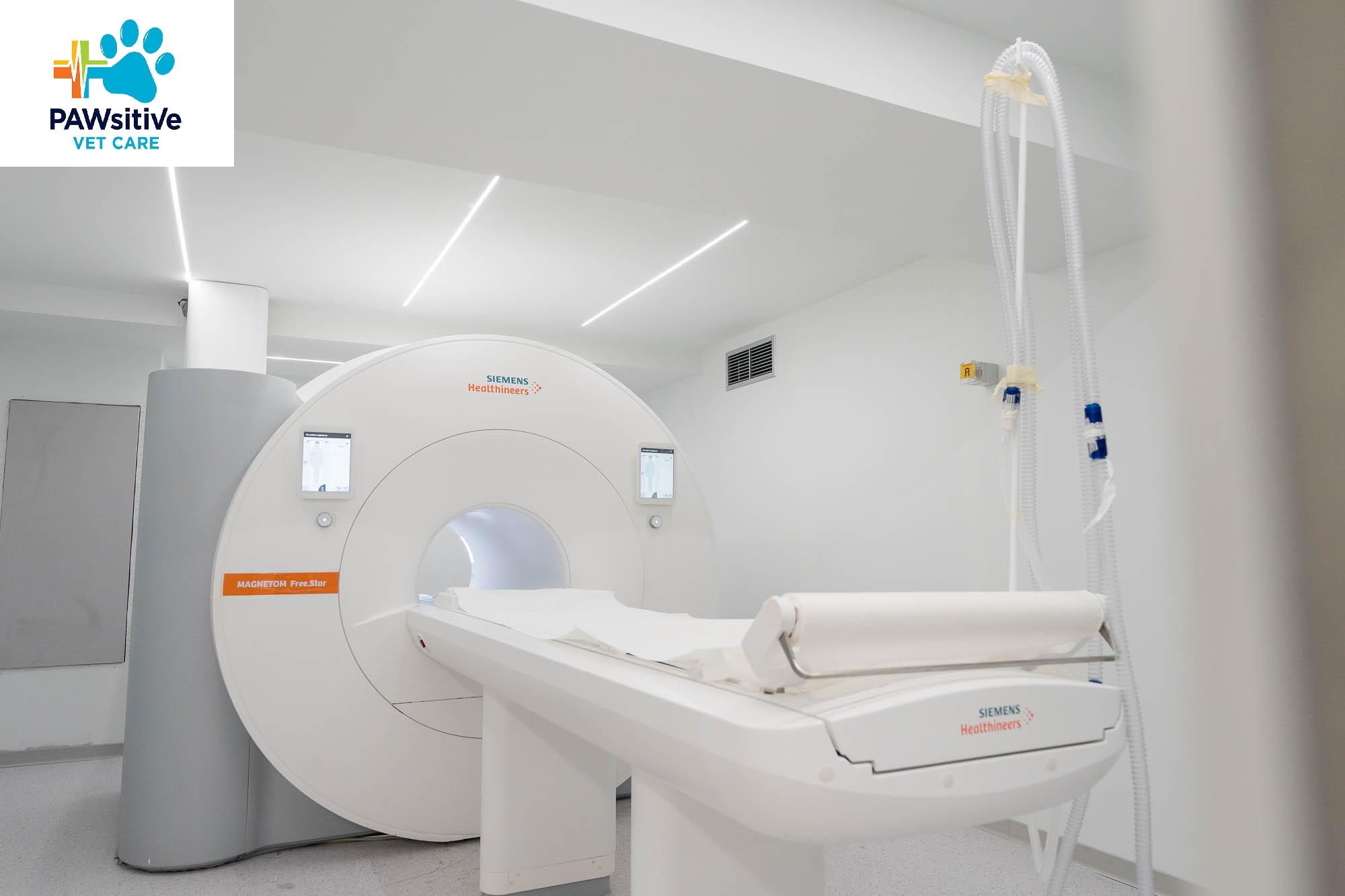


Magnetic Resonance Imaging (MRI scan)

Magnetic Resonance Imaging (MRI scan)
A powerful diagnostic tool for your pet
Magnetic Resonance Imaging (MRI) is an advanced diagnostic technique that uses strong magnets and radio waves to produce detailed images of the internal structures of your pet’s body. MRI in pets allows veterinarians to examine soft tissues, organs, bones, and joints with great precision, helping to diagnose a wide range of conditions.
Conditions Diagnosed with MRI in Dogs and Cats
If your dog is exhibiting symptoms such as lameness, difficulty walking, seizures, joint, neck or back pain, or even paralysis, an MRI may be recommended. Through this examination, the following can be diagnosed:
Spinal problems: Growths, herniated intervertebral disks or spinal canal stenosis
Brain abnormalities: Growths, inflammations or abscesses
Stroke
Musculoskeletal diseases: Anterior cruciate ligament tear, shoulder instability, injuries
Abdominal conditions: Organ Swelling or growths
MRI at Our Clinic
During the MRI procedure, patients must remain completely still; therefore, general anesthesia is administered to all pets. The patient must have fasted for 8-10 hours (not eaten) and abstained from water for 2 hours to avoid any complications of anesthesia. In addition, as tomography frequently requires the use of a contrast medium to enhance image quality, and is performed under general anesthesia, preliminary blood and blood chemistry panel of your pet is required.
Once the blood test is completed and anesthesia is administered, the pet is placed in the MRI scanner. Then, the imaging technician, together with the anesthesiologist and assistant, continuously monitors the patient. The entire process, from the administration of anesthesia until the pet wakes up, takes approximately 1.5 hours. Only at PAWsitive Vet Care does the anesthesiologist provide comprehensive intra‑anesthetic monitoring using a specialized anesthetic machine and compatible monitoring equipment located within the magnetic field cage.
MRI at our clinic includes the following services:
- General anesthesia for the patient.
- Supportive fluid therapy during anesthesia, if required.
- Magnetic resonance imaging.
- Short-term hospitalization until the pet has fully recovered.
- A diagnostic report of the MRI findings.
 Imaging Department
 Diagnostics Department
 Internal Medicine
 Surgery Department
 Endoscopy
 Hospitalization Department
 Physical Therapy
 Nutrition
 Pharmacy